
When I started comparing health insurance plans seriously, I realized how quickly things get confusing. Premiums look attractive at first, but once you check deductibles, out-of-pocket costs, and coverage limits, the real picture becomes harder to understand. That’s exactly where AI health insurance comparison in the USA is changing the way people choose plans today.
AI helps compare health insurance plans by analyzing your medical needs, budget, location, and risk profile. Instead of manually checking dozens of plans, you get a filtered, personalized shortlist that matches your situation. This not only saves time but also helps you avoid choosing a plan that looks cheap but costs more in the long run.
What Makes a Health Insurance Plan “Best” Today
A good health insurance plan is not just about low monthly premiums. What matters more is the balance between premium, deductible, coverage benefits, and network access.
From my experience reviewing plans, the best options usually offer predictable out-of-pocket costs, strong hospital networks, and coverage that matches your actual healthcare needs. This is where AI-based health insurance plan comparison becomes useful because it evaluates these factors together instead of showing them separately.
How AI Compares Health Insurance Plans More Accurately
Traditional comparison methods rely on filters like price and provider. AI takes this further by analyzing patterns in healthcare usage, expected medical costs, and plan structures.
For example, if you visit doctors frequently or need ongoing prescriptions, AI prioritizes plans with lower deductibles and better outpatient coverage. If you rarely use healthcare services, it may suggest high-deductible plans with lower premiums.
What I’ve noticed is that AI removes guesswork. Instead of choosing based on assumptions, you get recommendations aligned with real usage.
Top Health Insurance Providers in the USA with AI-Driven Comparison
UnitedHealthcare — Comprehensive Coverage with Digital Tools
UnitedHealthcare offers a wide range of individual and family plans along with strong digital tools. Its platform uses data insights to help users compare plans based on healthcare usage and cost estimates. From what I’ve seen, this works well if you want a balance between coverage flexibility and digital support.
Blue Cross Blue Shield — Nationwide Network and Plan Variety
Blue Cross Blue Shield stands out for its extensive provider network and multiple plan options. AI-driven tools available through partner platforms help compare plans based on location and medical needs. This makes it easier to find plans that offer strong local coverage.
Kaiser Permanente — Integrated Care with Predictable Costs
Kaiser Permanente combines insurance with healthcare services, which creates a more controlled cost structure.
Its digital system analyzes patient data to optimize care and reduce unnecessary expenses. From my perspective, this works well for individuals who prefer a structured healthcare system.
Aetna — Flexible Plans with AI-Enhanced Member Insights
Aetna offers plans with flexible pricing and coverage options. Its digital tools provide personalized cost estimates and plan recommendations, which help users understand long-term expenses instead of focusing only on monthly premiums.
Cigna — Global Coverage with Strong Digital Experience
Cigna focuses on both domestic and global health coverage. AI-based tools on its platform help compare plans based on lifestyle, travel needs, and healthcare usage, making it suitable for individuals with more dynamic requirements.
How to Compare Health Insurance Plans Using AI (Step-by-Step)
Start by entering your basic details such as age, location, and family size into an AI-powered comparison tool. This allows the system to filter out plans that do not match your eligibility.
Next, input your expected healthcare usage. This includes doctor visits, medications, and any ongoing treatments. AI uses this information to estimate total annual costs instead of just showing premiums.
Then review plan recommendations based on cost efficiency, coverage benefits, and provider networks. Instead of focusing only on the cheapest option, look at the overall value.
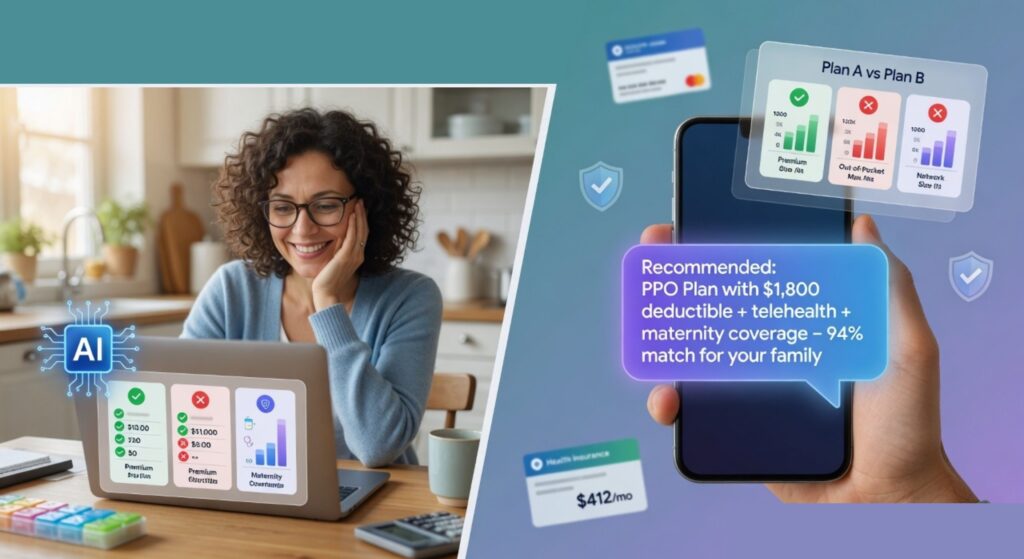
Finally, compare shortlisted plans side by side. AI tools highlight differences in deductibles, co-pays, and out-of-pocket limits, which helps you make a more informed decision.
Why AI-Based Health Insurance Comparison Saves Money
The biggest mistake I see people make is choosing plans based only on monthly premiums. This often leads to higher costs later due to deductibles and uncovered services.
AI helps avoid this by calculating total expected costs based on your usage. This means you choose a plan that fits your real needs instead of just looking affordable upfront.
From my experience, this approach leads to better financial outcomes and fewer surprises during medical situations.
Choosing the Right Plan Based on Your Needs
If you expect frequent medical visits, plans with lower deductibles and higher premiums may be more cost-effective. If your healthcare usage is minimal, high-deductible plans with lower premiums can work better.
Families often benefit from comprehensive coverage with predictable costs, while individuals may prioritize flexibility and affordability.
What matters most is aligning the plan with your lifestyle, and AI makes this process easier by analyzing these factors together.
A Smarter Way to Compare Health Insurance Plans in the USA
The way I see it, choosing health insurance is no longer about scanning endless plan lists. It is about understanding what actually works for your situation.
AI health insurance comparison in the USA brings clarity by connecting cost, coverage, and usage into one system. This makes it easier to choose plans that provide real value instead of just low initial pricing.
FAQs
The best plan depends on your healthcare needs, budget, and location. AI tools help identify the most suitable option based on these factors.
AI helps reduce costs by recommending plans that match your usage, avoiding unnecessary expenses.
Use AI-based comparison tools to evaluate total costs, coverage benefits, and provider networks instead of focusing only on premiums.

Samuel Clarke
Samuel ClarkeSamuel Clarke is an insurance specialist with hands-on experience in policy management, risk assessment, and customer-focused financial protection strategies. He holds a Bachelor’s degree in Business Administration from the University of Florida, He has already built a strong foundation in the insurance industry, having previously worked as an Insurance Manager.