


When I started tracking AI-driven semiconductor stocks, AMD stood out not because it was leading the market, but because it was quietly building strong momentum behind the scenes. What changed recently is the scale.
The latest data shows that AI growth driving AMD stock price is no longer a future assumption, it is already visible in revenue, margins, and long-term projections.
AI growth is driving AMD stock price higher as demand for AI chips, data center infrastructure, and high-performance computing continues to expand. With record data center revenue, rising AI-related earnings, and large enterprise deals, AMD is now showing clear financial strength tied directly to AI adoption.
What Changed Recently: Real AI Revenue Is Now Visible
Earlier, AI was mostly discussed as a growth opportunity. Now, it is showing up clearly in AMD’s numbers.
AMD’s data center revenue reached $16.6 billion in 2025, marking a 32 percent year-over-year increase. This is not a small improvement. It reflects strong demand from companies building AI infrastructure at scale.
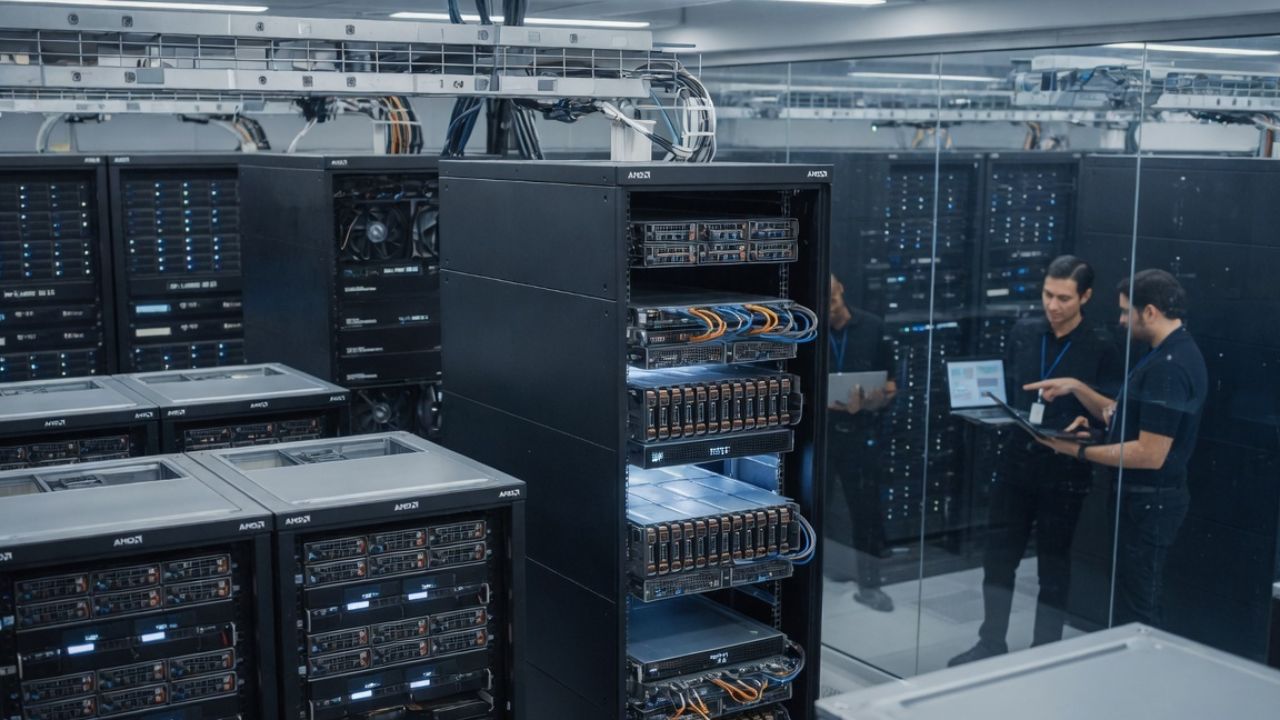
From what I’ve seen, this is the point where investor confidence shifts. When growth moves from projections to actual earnings, the stock starts reacting differently because the story becomes measurable.
How AI Demand Is Fueling AMD’s Data Center Growth
The biggest driver behind this growth is AMD’s push into AI-focused hardware. Its Instinct GPUs are designed for AI training and inference, which are essential for running large models. The upcoming MI450 series is expected to deliver higher performance at a system level, not just at the chip level.
This shift toward full AI systems is important because companies are no longer buying individual components, they are investing in complete AI infrastructure.
Data center revenue alone reached $5.4 billion in Q4 2025, showing a 39 percent increase in that quarter. Along with GPUs, AMD’s EPYC processors are also seeing strong demand because they support AI workloads and large-scale computing environments.
From my perspective, this combination of CPU and GPU growth creates a stronger foundation than relying on a single product line.
Big AI Deals with Hyperscalers Are Driving Revenue Visibility
One of the most important developments I’ve noticed is AMD’s growing presence among large technology companies.
Companies like Meta and OpenAI are signing major deals for AI infrastructure. These are not short-term contracts. They often span multiple years and involve large-scale deployments.
This matters because it creates predictable revenue. When large clients commit to long-term AI infrastructure, it reduces uncertainty and strengthens AMD’s growth outlook.
This is one of the key reasons why AMD stock growth linked to AI demand is gaining attention among investors.
AI Revenue Growth and Its Direct Impact on AMD Stock Price
Analysts now estimate that AMD could generate around $9.5 billion in AI-related revenue in 2026, nearly doubling previous levels. At the same time, gross margins are expected to rise above 55 percent, which improves overall profitability.
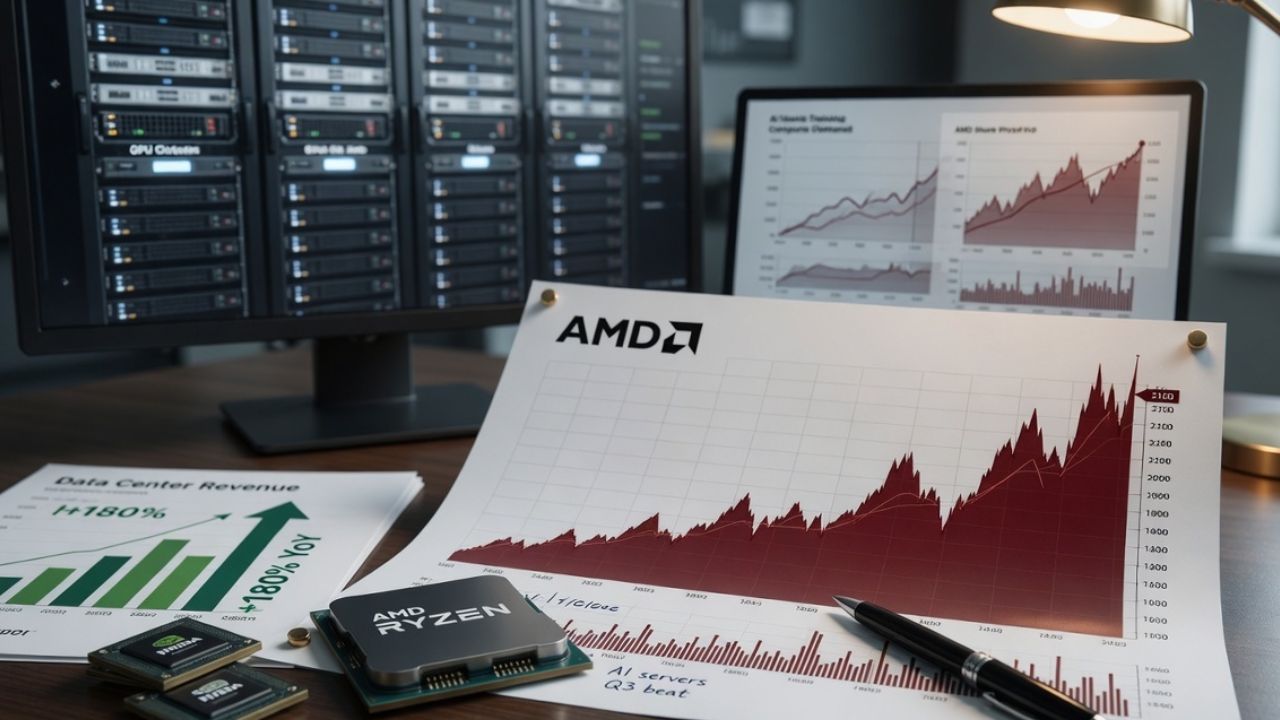
Higher margins combined with revenue growth directly impact earnings per share, which is one of the main drivers of stock price movement.
From what I’ve observed, this is where the market starts pricing in future potential. When earnings visibility improves, stock valuations often expand.
How Global AI Spending Supports AMD’s Long-Term Growth
AI is not a small trend anymore. Global spending on AI is projected to reach $2.5 trillion, which creates a massive opportunity for companies building the infrastructure behind it.
AMD is targeting 10 to 20 percent market share in AI accelerators, positioning itself as a strong alternative in a market that is still dominated by a single major player.
Even a modest share in such a large market can significantly impact revenue growth. That’s why long-term investors are paying attention to AMD’s positioning.
Key Catalysts That Can Push AMD Stock Price Higher
Looking ahead, several catalysts could continue driving AMD’s stock. The launch of the Helios AI rack in 2026 is one of them. It combines advanced GPUs with high-speed networking to deliver better performance for AI workloads.
As deployments from companies like OpenAI and Meta scale, these systems can generate significant revenue over time.
Another factor is earnings momentum. AMD recently reported 34 percent overall revenue growth, and each strong earnings report reinforces investor confidence.
From my experience, stocks in high-growth sectors often move based on these catalysts, especially when they align with long-term trends like AI.
Risks That Could Affect AMD’s AI Growth Story
Even with strong growth, there are risks that should not be ignored. Supply constraints remain a challenge because chip production depends on manufacturing capacity, which takes time to scale. Competition is also intense, especially from companies that currently lead the AI chip market.
Geopolitical factors and market conditions can also impact demand and pricing. In addition, AMD’s valuation has already increased, which means expectations are high.
From my perspective, the key is execution. If AMD continues delivering on its growth targets, the momentum can sustain. If not, the stock may face pressure.
How to Track AMD’s AI Growth as an Investor
If you want to follow this story closely, a few indicators matter more than others. Data center revenue is one of the most important metrics because it reflects AI demand directly. Updates on GPU shipments, especially the MI450 series, provide insight into future growth.

Earnings calls often reveal margin trends and client demand, which help you understand how the business is evolving.
Tracking these signals gives a clearer picture of whether the AI growth story is strengthening or slowing down.
A Practical View on AMD as an AI Growth Stock
What stands out to me is that AMD is no longer just participating in AI growth, it is benefiting from it in a measurable way.
The combination of rising data center revenue, expanding AI partnerships, and improving margins creates a strong foundation for long-term growth. At the same time, competition and execution risks remain part of the equation.
From an investment perspective, this is not just a hype-driven story anymore. It is a data-backed shift where AI demand is directly influencing AMD’s financial performance and stock price.
FAQs
AI demand increases the need for data center chips and GPUs, which drives AMD’s revenue and improves earnings.
Analysts estimate around $9.5 billion in AI-related revenue for 2026, showing strong growth potential.
Key risks include competition, supply constraints, and high market expectations.

Matthew Gibson
Matthew Gibson — Stock Market & Trading ExpertMatthew Gibson is a stock market analyst, active trader, and entrepreneur with extensive experience in equity markets, technical analysis, and portfolio management. He holds a Bachelor’s degree in Finance from the University of California, Berkeley and an MBA in Investment Management from the Columbia Business School.