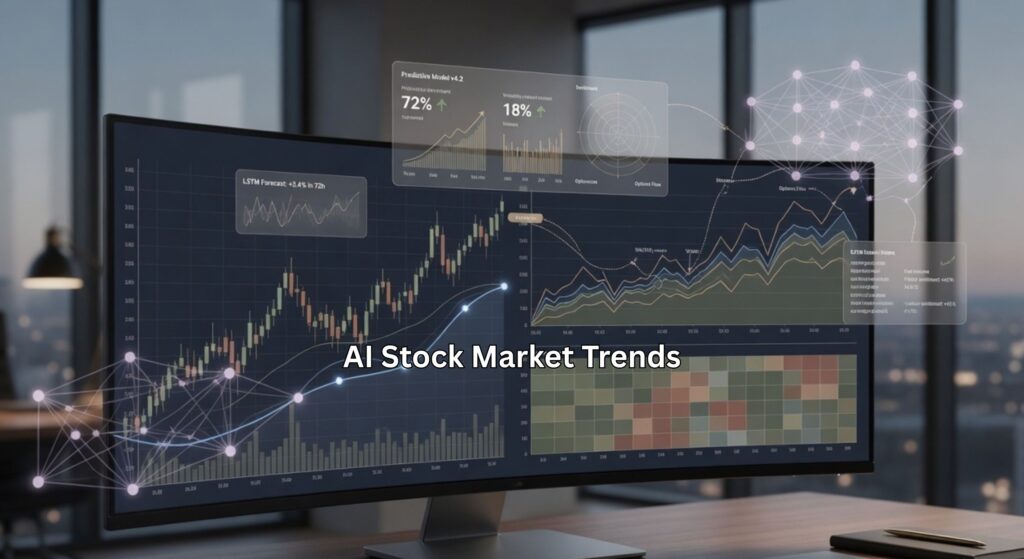

When I started using AI for stock market analysis, I was expecting it to tell me exactly which stock would go up next. That expectation didn’t last long. The more I explored these tools, the more I understood that AI is not designed to give perfect predictions. What it actually does is far more useful. It helps you see patterns, understand market behavior, and make decisions based on probability instead of guesswork.
AI stock market trend prediction works by analyzing large amounts of data, identifying repeating patterns, and estimating how similar situations might play out. Instead of trying to predict the future directly, it focuses on recognizing conditions that have historically led to certain outcomes. This makes it a powerful support system for anyone trying to understand the market.
What AI Is Really Doing When It Analyzes the Market
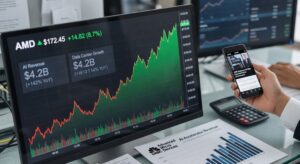
One thing that becomes clear very quickly is that AI is not “thinking” like a human. It is processing data at a scale and speed that we simply cannot match. It looks at price movements, trading volume, company performance, and even market sentiment all at the same time. While a beginner might check a chart or read news separately, AI connects all of these signals into one view.
From my experience, this changes how you approach analysis. Instead of jumping between different sources and trying to form a conclusion, you start with structured insights. AI shows you what is happening beneath the surface, which makes the market feel less random and more understandable.
How AI Uses Patterns to Identify Possible Trends
Markets are not completely unpredictable. They often react in similar ways under similar conditions. For example, strong earnings combined with positive sentiment can lead to upward momentum, while uncertainty and negative news often create downward pressure.
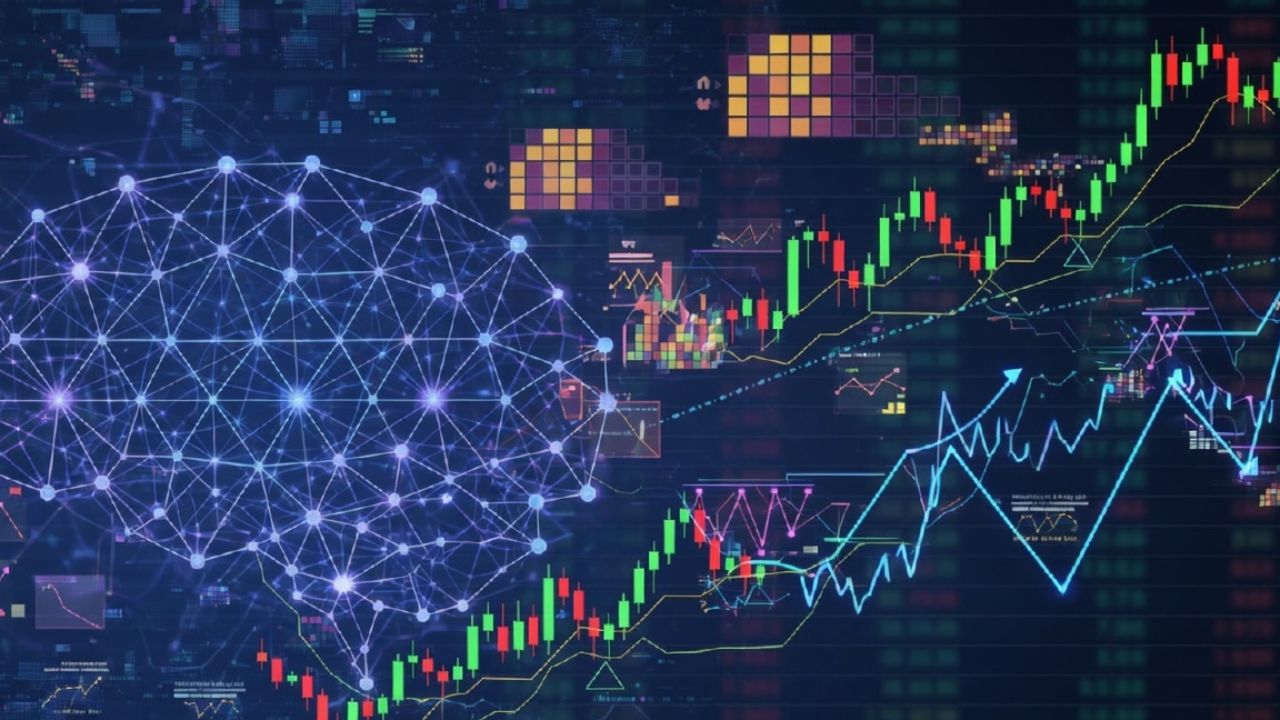
AI models are trained to recognize these repeating behaviors. When similar patterns appear again, the system highlights them as potential trends. It does not say, “this will happen,” but it indicates that conditions are similar to past situations where certain outcomes occurred.
What I’ve found useful here is the shift in thinking. You stop looking for certainty and start looking for probability. That alone improves decision-making because you are no longer reacting emotionally to every market move.
Why AI Feels More Accurate Than Manual Analysis
When you analyze the market manually, you are limited by time and attention. You might focus on one or two factors and miss others that are equally important. AI removes that limitation by evaluating multiple variables together.
It can compare thousands of historical scenarios with current market conditions and identify similarities within seconds. This does not make it perfect, but it does make it more consistent.
From what I’ve seen, this consistency is what gives AI an edge. It does not get tired, it does not panic, and it does not change its approach based on emotions.
How Machine Learning Improves Market Analysis Over Time
Another important aspect is how AI evolves. Machine learning models improve as they process more data. If certain patterns lead to incorrect outcomes, the system adjusts. If patterns prove reliable, they become stronger signals.
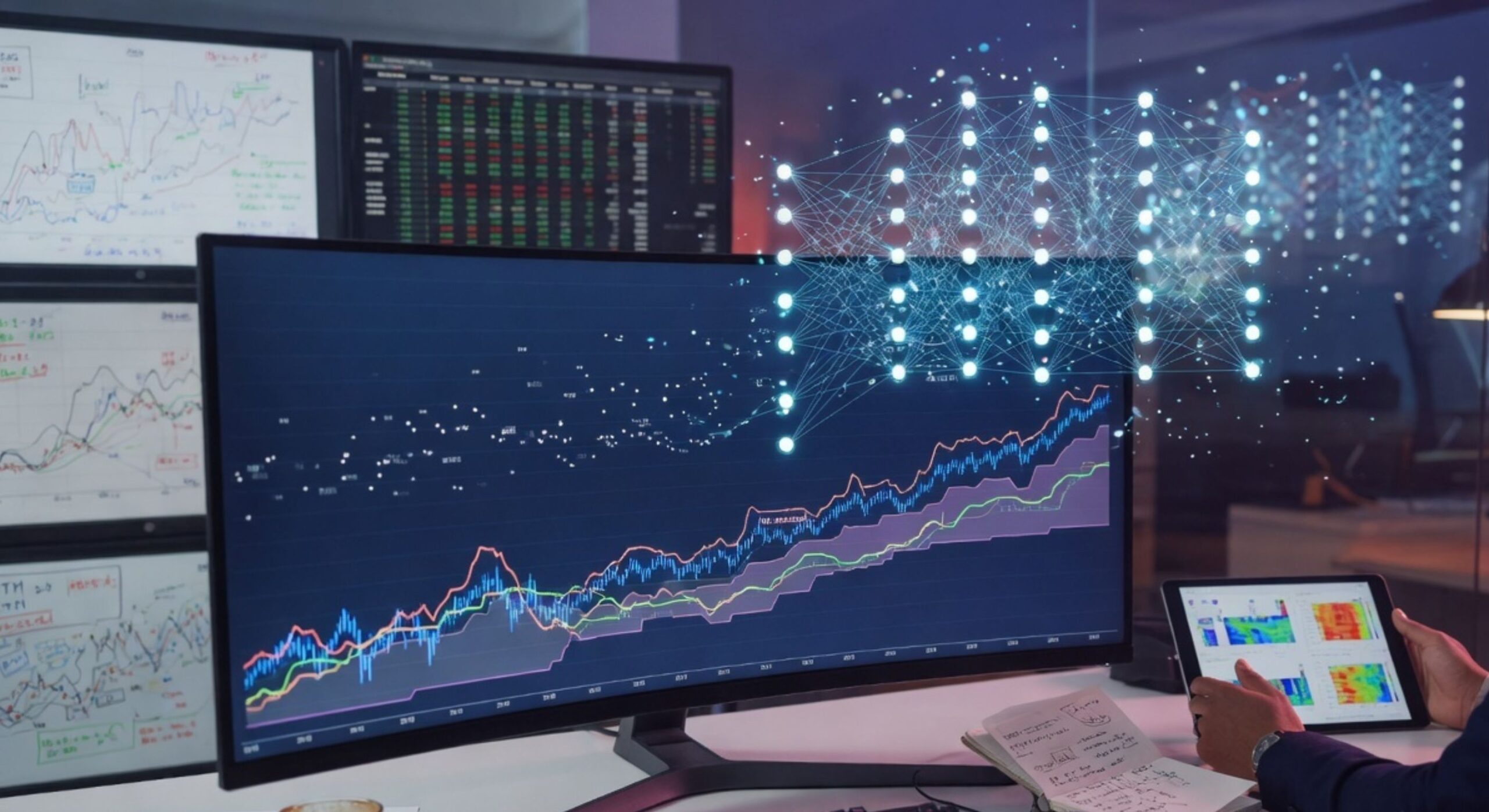
This continuous learning process makes AI-based stock market prediction systems more refined over time. However, it also means they depend heavily on the quality of data. If the data is incomplete or misleading, the output will reflect that.
That’s why I always see AI as a tool that improves analysis, not a system that replaces thinking.
Where Beginners Usually Misunderstand AI Predictions
One mistake I see beginners make is treating AI signals as final decisions. They assume that if a tool highlights a trend, it must be correct. This mindset often leads to poor decisions because it ignores the uncertainty of the market.
AI provides guidance, not guarantees. It helps you understand what is likely, but it cannot account for sudden events like economic shifts or unexpected news.
From my perspective, the right approach is to combine AI insights with basic investing principles. When both align, your decisions become stronger.
How to Start Using AI for Stock Market Trends as a Beginner
If you are just starting, the key is not to rely on too many tools at once. Focus on one platform that helps you understand trends clearly. Spend time learning how it interprets data and why it highlights certain signals.
Pay attention to how trends form, how long they last, and how often they repeat. This builds your understanding gradually instead of overwhelming you with information.
What worked for me was treating AI as a learning tool first. Once you understand how it thinks, you start using it more effectively.
Read also: 5 Best AI Tools for Stock Trading in 2026
The Real Advantage: Clarity Instead of Confusion
The biggest benefit I’ve noticed is clarity. The stock market can feel noisy and unpredictable, especially for beginners. AI reduces that noise by focusing on meaningful patterns and filtering out unnecessary signals.
This does not make investing easy, but it makes it more structured. You start making decisions based on information instead of reactions.
A Better Way to Think About Market Predictions
Over time, my approach to the market changed because of AI. Instead of asking which stock will go up next, I started asking what the data suggests and how strong that signal is.
This shift makes a big difference. It moves you away from guessing and toward understanding. And that is where real improvement happens.
FAQs
AI improves prediction by analyzing patterns and probabilities, but it cannot guarantee exact outcomes.
Yes, AI helps beginners understand trends and data more clearly, making the learning process easier.
No, AI should support your decisions, not replace them. Combining AI insights with your own understanding leads to better results.

Matthew Gibson
Matthew Gibson — Stock Market & Trading ExpertMatthew Gibson is a stock market analyst, active trader, and entrepreneur with extensive experience in equity markets, technical analysis, and portfolio management. He holds a Bachelor’s degree in Finance from the University of California, Berkeley and an MBA in Investment Management from the Columbia Business School.