
When I started comparing AI trading bots with human traders, I wasn’t trying to prove which one is better. I wanted to understand where the actual profits come from and why results look so different depending on who or what is making the decisions.
Most beginners assume AI always wins because it is faster, while experienced traders often argue that human judgment still matters more. The truth sits somewhere in between, and once you look at how both operate, the difference becomes much clearer.
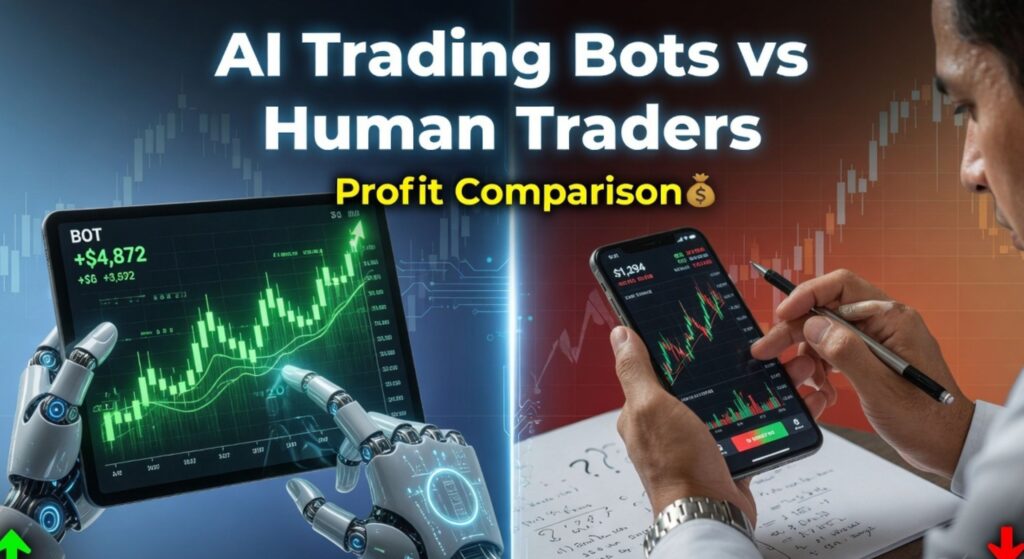
AI trading bots and human traders approach the market in completely different ways. AI focuses on speed, pattern recognition, and consistency, while human traders rely on experience, judgment, and adaptability. Profit outcomes depend less on “who is better” and more on how each approach handles different market conditions.
How AI Trading Bots Actually Generate Profits
AI trading bots work by analyzing large amounts of market data and executing trades based on predefined strategies or machine learning models. They monitor price movements, volume, technical indicators, and sometimes even news sentiment at a scale that no human can match.
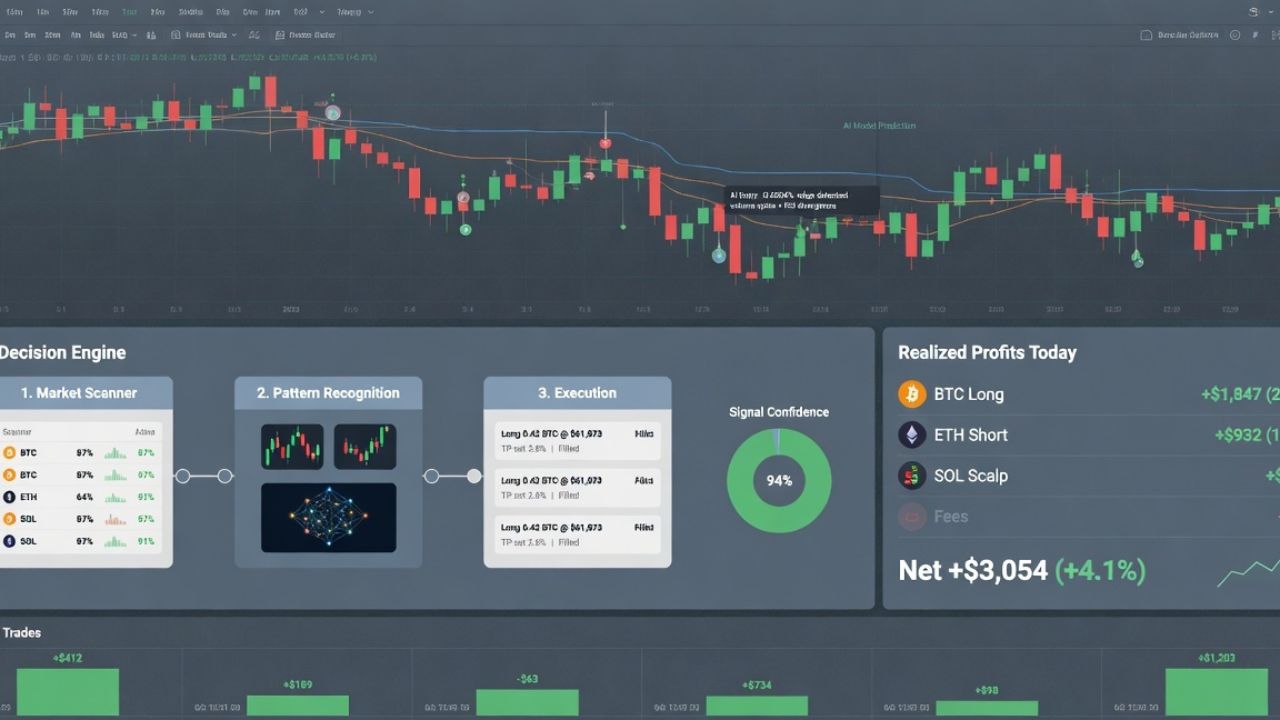
From what I’ve seen, their biggest advantage is consistency. An AI bot does not hesitate, does not overthink, and does not change its behavior because of fear or excitement. If a condition matches its strategy, it executes the trade immediately.
This makes AI trading bots particularly effective in situations where the market follows clear patterns, such as short-term trends or high-frequency trading environments. In these conditions, small profits accumulate over time, which can lead to strong overall performance.
How Human Traders Approach Profit and Risk
Human traders operate very differently. They do not just react to data, they interpret it. A trader looks at charts, news, market sentiment, and broader economic context before making a decision. This process takes more time, but it allows for flexibility. When the market behaves unexpectedly, a human can pause, reassess, and adjust strategy.
From my experience, this adaptability becomes important during volatile or uncertain market conditions. AI systems often struggle when patterns break, while human traders can step back and avoid unnecessary losses.
Profit for human traders often comes from fewer but more deliberate decisions rather than continuous execution.
Profit Comparison: Where AI Trading Bots Perform Better
In stable and data-driven environments, AI trading bots tend to perform better. Markets that follow technical patterns allow bots to identify opportunities quickly and execute trades without delay.
For example, in intraday trading or algorithmic strategies, speed matters. AI bots can process signals and act within milliseconds, which gives them a clear advantage over manual trading.
Another area where AI performs well is discipline. It follows rules strictly, which prevents emotional mistakes that often reduce profitability for human traders.
Profit Comparison: Where Human Traders Have the Edge
There are situations where human traders outperform AI, especially when the market becomes unpredictable.
During sudden news events, economic changes, or shifts in sentiment, markets can move in ways that do not match historical patterns. AI models rely heavily on past data, so they may not react effectively in these scenarios.
A human trader can recognize that something unusual is happening and choose to stay out of the market or adjust strategy. This ability to avoid bad trades often protects profits more than chasing every opportunity.
From what I’ve observed, experienced traders tend to perform better in long-term investing because they combine data with judgment and patience.
The Role of Emotions in Profit Outcomes
One of the biggest differences between AI and human traders is emotion. AI trading bots operate without emotion, which helps maintain consistency. They do not panic during losses or become overconfident after gains. This stability often improves long-term results.
Human traders, on the other hand, deal with fear, greed, and hesitation. These emotions can lead to overtrading, late entries, or early exits. From my experience, this is where many traders lose potential profits.
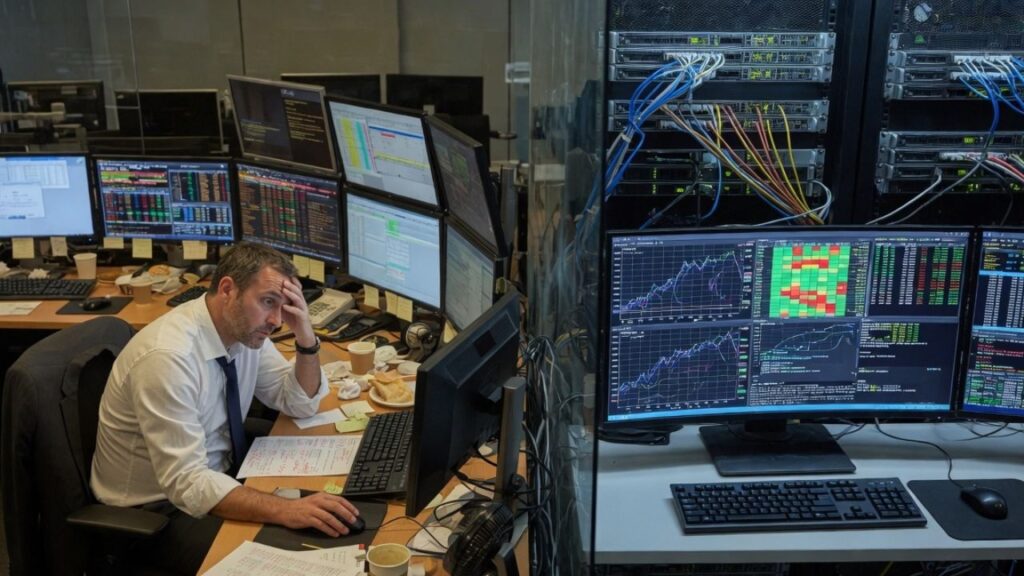
However, emotions are not always negative. They can also act as a warning system. A trader might sense that a situation feels risky even if the data looks fine, which can prevent losses.
Can AI Trading Bots Replace Human Traders Completely
Based on everything I’ve seen, AI trading bots cannot fully replace human traders. They excel in execution and data analysis, but they lack context and judgment.
The most effective approach is combining both. AI handles repetitive tasks, pattern recognition, and fast execution, while humans focus on strategy, risk management, and decision-making.
This combination creates a more balanced system where strengths from both sides contribute to better outcomes.
What Beginners Should Understand Before Choosing Between AI and Manual Trading
If you are starting out, it is important to avoid thinking in extremes. Choosing between AI and human trading is not about picking one and ignoring the other.
AI tools can help you understand trends, identify opportunities, and improve execution. At the same time, you need to learn basic market behavior, risk management, and strategy.
From my experience, relying completely on AI without understanding the reasoning behind trades leads to poor decisions. Using AI as a support tool while building your own knowledge leads to better results.
A Practical View on Profit in AI vs Human Trading
Profit in trading does not come from the tool alone. It comes from how the tool is used. AI trading bots bring speed, consistency, and data-driven execution. Human traders bring judgment, adaptability, and strategic thinking. Each has strengths and limitations, and profitability depends on how well those strengths are applied.
What I’ve learned over time is that the goal is not to choose between AI and humans. The goal is to understand how both can work together to improve decision-making and reduce mistakes.
FAQs
AI trading bots can be more consistent in stable markets, but human traders may perform better in unpredictable conditions.
No, AI trading bots do not guarantee profits because market conditions can change unexpectedly.
Beginners can use AI bots as a support tool, but they should also learn trading basics to make informed decisions.

Matthew Gibson
Matthew Gibson — Stock Market & Trading ExpertMatthew Gibson is a stock market analyst, active trader, and entrepreneur with extensive experience in equity markets, technical analysis, and portfolio management. He holds a Bachelor’s degree in Finance from the University of California, Berkeley and an MBA in Investment Management from the Columbia Business School.